Pokémon Trainer Gallery: Seven Cards, Including Gengar TG06
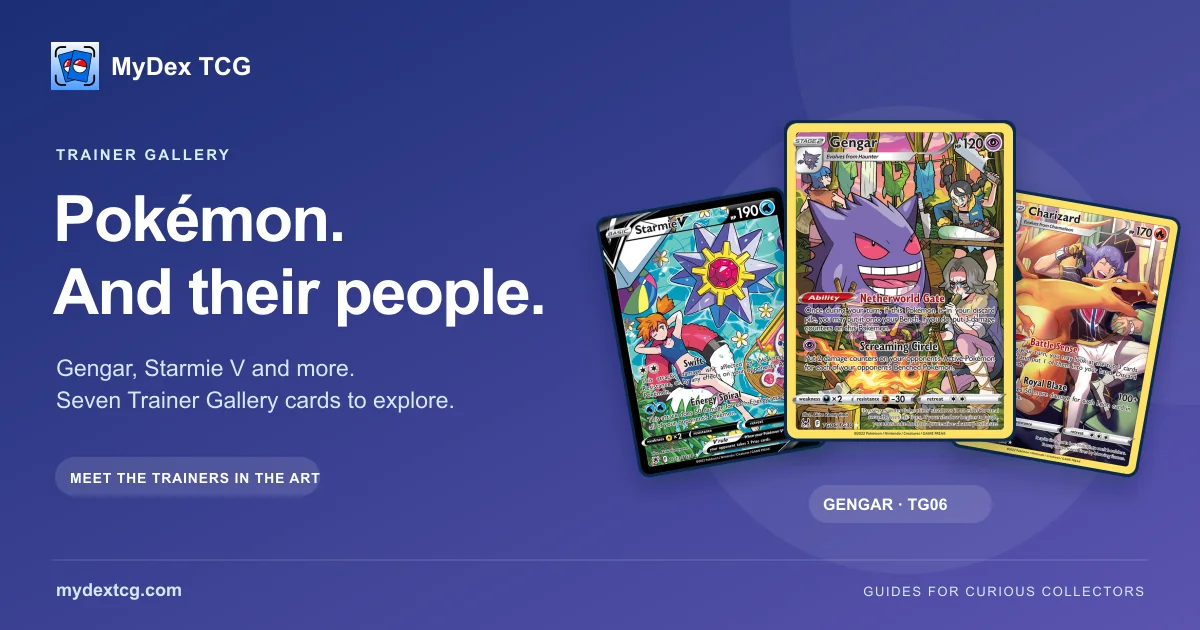
Identify seven Pokémon Trainer Gallery cards, including Gengar TG06/TG30. Learn TG numbering, featured Trainers, set names and illustrator credits.
Quick answer
Table of Contents
Key takeaways
- What does TG mean on a Pokémon card?
- Which sets have a Trainer Gallery?
- Seven exact cards with recognizable Trainers
What does TG mean on a Pokémon card?
TG means Trainer Gallery, a separately numbered subset found in four English Sword & Shield expansions. Many of its illustrations show Pokémon alongside familiar human characters: Misty relaxing with Starmie, Sonia getting ready to leave with Boltund, or a Champion spending time with their partner Pokémon.
The important detail is the printed TG collector number. A person appearing in the picture does not, by itself, make a card part of a Trainer Gallery. Keep the expansion name too: different galleries reuse numbers such as TG13.
Which sets have a Trainer Gallery?
The four are Brilliant Stars, Astral Radiance, Lost Origin and Silver Tempest. Each has a 30-card Trainer Gallery. Pokémon confirms those counts in its Brilliant Stars overview, Astral Radiance gallery feature, Lost Origin overview and Silver Tempest announcement.
A number such as TG13/TG30 locates a card inside that expansion's gallery, separately from its main numbered checklist. It does not mean the expansion contains only 30 cards. The symbols guide explains how the set mark and collector number work together.
Seven exact cards with recognizable Trainers
These examples identify English printings. The linked catalog records provide their numbers, illustrator credits and full card images; Pokémon's official artwork features identify the people shown.
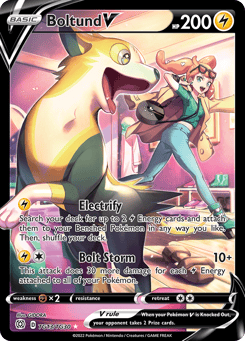
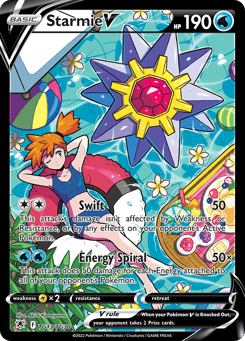
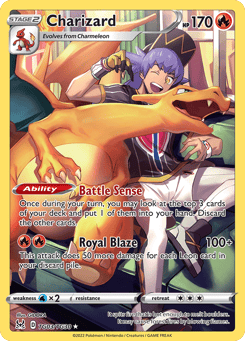
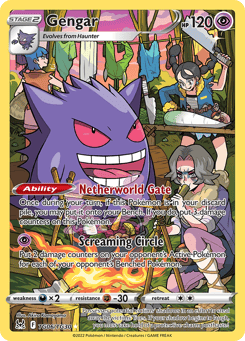
| Card and number | Trainer pictured | Trainer Gallery | Illustrator |
|---|---|---|---|
| Boltund V TG13/TG30 | Sonia | Brilliant Stars | GIDORA |
| Starmie V TG13/TG30 | Misty | Astral Radiance | Akira Komayama |
| Zacian V TG21/TG30 | Hop | Astral Radiance | aoki |
| Charizard TG03/TG30 | Leon | Lost Origin | GIDORA |
| Pikachu TG05/TG30 | Akari | Lost Origin | Atsushi Furusawa |
| Gengar TG06/TG30 | Charm, Clover and Coin | Lost Origin | Akira Komayama |
| Zeraora V TG16/TG30 | Selene | Silver Tempest | yuu |
Pokémon identifies Sonia in its Boltund preview, Misty in the Astral Radiance feature, and Hop in its Galar artwork retrospective. The Lost Origin feature identifies Leon and Akari, called Lionel and Kira in that Spanish edition. The Silver Tempest preview identifies Selene.
Gengar Trainer Gallery: TG06/TG30 from Lost Origin
The Gengar Trainer Gallery card is TG06/TG30 from Lost Origin, illustrated by Akira Komayama. Its camping scene features the Miss Fortune Sisters: Charm, Clover and Coin. Pokémon's official artwork description identifies the sisters at camp, with their leader Charm tending the fire alongside Gengar. In that Spanish edition, Charm is called Jara.
Look for the camp cooking scene, then check the TG06 number and artist credit on the complete card image. Lost Origin also has a different Gengar 066/196 in its main set. A listing labeled only “Gengar Lost Origin” does not distinguish those printings; include Trainer Gallery TG06 when searching for this illustration.
Look at what the pair is doing
The scenes offer different ways to build a small artwork collection. Boltund and Sonia suggest everyday life: Sonia is preparing to head out while Boltund looks eager. Starmie and Misty share a poolside break. Charizard and Leon occupy a sofa together, while Pikachu and Akari rest beneath a tree. Those settings give the characters room to interact outside a battle.
For a different mood, compare Hop and Zacian in the Slumbering Weald with Zeraora and Selene jumping into action. These are separate compositions, so they can share a binder theme without forming a continuous picture. The official features linked above describe the scenes; they do not establish a connecting panorama between these seven cards.
Artist credits offer another route through the gallery. GIDORA illustrated both the Boltund and Charizard examples, even though they belong to different expansions. Recording the illustrator alongside the Pokémon, Trainer and number makes that connection easier to revisit.
Is a Trainer Gallery card a Trainer card?
Trainer Gallery names the subset; Trainer names a gameplay card type. All seven examples above are Pokémon cards. Sonia appearing beside Boltund does not turn Boltund V into a Supporter card.
The gallery also includes actual Trainer cards. Acerola's Premonition TG24/TG30, for example, is a Trainer—Supporter from Brilliant Stars. Check the printed card heading and rules text to tell the difference. The TG prefix cannot answer that question on its own.
Likewise, gallery membership does not give every card the same rarity. Keep the card's individual rarity separate from its subset, and use the rarity guide when comparing labels from different eras.
A checklist for identifying the right printing
- Match the Pokémon's full name, including V or VMAX where printed.
- Keep the TG prefix and full number, not just the digits.
- Match the expansion: Boltund and Starmie above are both TG13, but belong to different galleries.
- Compare the illustration and artist credit with the linked card image.
- Record language and condition separately when comparing copies or price references.
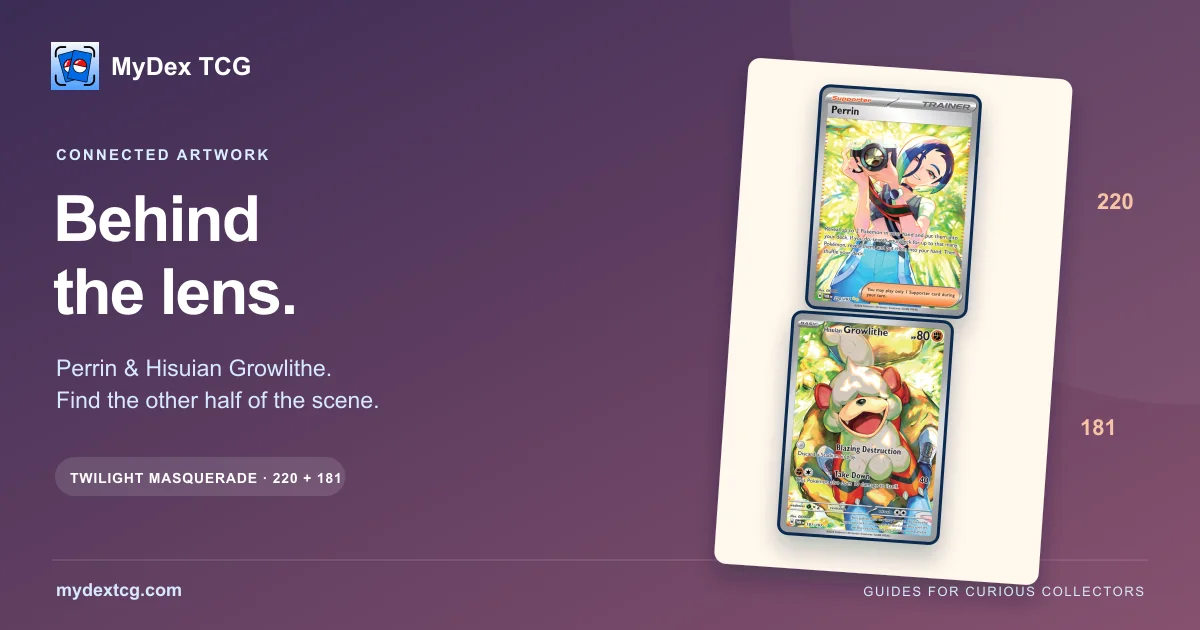
For another example of a person and Pokémon sharing an artwork theme, explore Perrin 220 and Hisuian Growlithe 181. Those Twilight Masquerade cards use Scarlet & Violet numbering and rarity categories, rather than TG numbers. The visual relationship is worth comparing while keeping the printings distinct.
Browse more companion scenes in the connected-artwork gallery, or open an exact card above to start a checklist around a favorite Trainer or illustrator.
Methodology
Sources
- Pokémon: Brilliant Stars and its 30-card Trainer Gallery
- Pokémon: Boltund V with Sonia in Brilliant Stars
- Pokémon: Astral Radiance Trainer Gallery and Misty with Starmie
- Pokémon: Galar artwork retrospective, including Hop and Zacian
- Pokémon: Lost Origin Trainer Gallery scenes (Spanish)
- Pokémon: Gengar and the Miss Fortune Sisters at camp (Spanish)
- Pokémon: Lost Origin expansion and Trainer Gallery count
- Pokémon: Zeraora V with Selene in Silver Tempest
- Pokémon: Silver Tempest announcement and Trainer Gallery count
Related Tools & Next Steps
Track the Cards You Research
The web is great for quick answers. The app is where you scan cards, track value, and manage the collection you actually own.
Download MyDex TCG